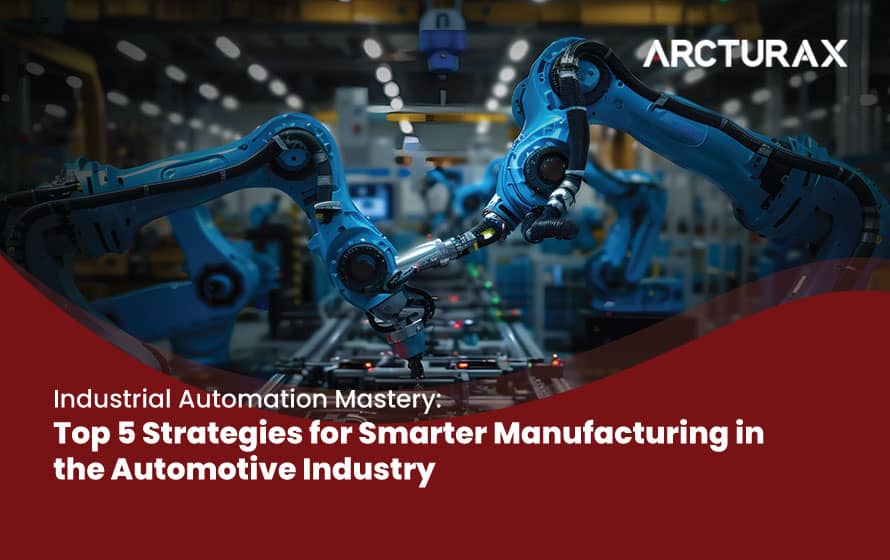
Industrial Automation Mastery: Strategies for Smarter Manufacturing in the Automotive Industry
The automotive industry is in the midst of a transformation powered by industrial automation. As vehicle demand evolves, automotive manufacturers are facing unprecedented challenges—rising raw material costs, the relentless pressure for faster delivery cycles, and uncompromising global standards for quality and sustainability. In this highly competitive environment, automation is no longer a luxury—it’s the cornerstone for resilience and future growth.
At Arcturax, we believe that for automotive industry leaders and decision-makers, mastering industrial automation means adopting smarter, connected processes that drive efficiency, enhance flexibility, and foster innovation at every level of production. Here are the top five strategies you should embrace to stay ahead.
1. Implementing Robotics for Precision & Speed
Modern automotive plants are the benchmarks for robotic precision. From press shops to painting booths and final automotive assembly lines, robots are integrated to handle repetitive, high-precision tasks—resulting in fewer defects and greater throughput. Robotic arms and Delta robots, as used on instrument panel assembly and automated welding lines, ensure consistent quality on complex components. These advancements enable manufacturers to scale production rapidly, reduce human error, and adapt to new vehicle models with minimal disruption.
Industry example: Leading automakers now deploy six-axis robotic welding systems on their body shop floors, achieving flawless weld quality and meeting tight production deadlines. This robotic deployment directly addresses both speed and precision, vital for competitive automotive production.
2. Data-Driven Manufacturing & AI Integration
Harnessing real-time production data is key to unlocking efficiency. Smart sensors and AI-driven analytics systems monitor every stage of the automotive production line. By deploying intelligent dashboards and predictive models, manufacturers gain insights into equipment performance, identify process bottlenecks, and optimize resource allocation.
Industry example: Tier-1 automotive suppliers use AI-powered visual inspection systems to analyze thousands of weld joints and painted surfaces per hour, catching quality issues instantly. This data-driven manufacturing approach not only reduces defects but also drives continuous improvement across facilities.
3. Predictive Maintenance with IoT & Sensors
Unexpected downtime is a major cost and risk in automotive production. With IoT-enabled sensors embedded in critical machines, manufacturers can adopt predictive maintenance strategies—detecting potential failures before they result in costly halts. Smart equipment tracks vibration, temperature, and load, alerting teams to take proactive action.
Industry example: Automotive factories leveraging real-time monitoring on robotic arms and forming presses have slashed unplanned downtime, improved asset lifespans, and optimized maintenance budgets. Predictive maintenance allows more production to be delivered on time, improving both output and customer satisfaction.
4. Smart Supply Chain & Real-Time Tracking
Automation goes beyond the shop floor. Smart supply chains powered by automated tracking, robotics, and real-time logistics management ensure every part is delivered just-in-time and in perfect condition. Automated guided vehicles (AGVs) now transport components between zones, guided by real-time inventory data.
Industry example: Automotive OEMs have adopted digital supply chain platforms that monitor supplier performance, track shipment locations, and manage inventory automatically. This holistic visibility not only reduces stock-outs but also increases resilience to supply disruptions.
5. Flexible & Scalable Automation Solutions
With ever-changing consumer preferences and the shift toward electric vehicles, flexibility is essential. Modular automation systems empower manufacturers to quickly reconfigure lines, supporting new models, lightweight materials, and component upgrades without extensive downtime.
As automotive brands seek greater fuel efficiency and electrification, the move toward lightweight materials—like advanced composites and aluminum—demands new tooling, forming, and automation approaches. Supporting this shift, automated forming lines and precision moulding solutions ensure new materials can be integrated swiftly into high-volume production.
Industry example: Factories using automated thermoforming lines can switch seamlessly between traditional steel and next-gen lightweight materials. This agility allows rapid prototyping and supports high-mix, low-volume vehicle segments.
Future-Proof Your Automotive Production with Automation
Embracing industrial automation is not just about operational efficiency—it’s about building the resilient, adaptable, and sustainable automotive plants of tomorrow. As regulatory requirements tighten and customer demands intensify, those who invest in advanced automation solutions will set the benchmark for quality, profitability, and innovation.
Ready to transform your automotive production line? Arcturax is your trusted partner for automation-driven industrial equipment, offering comprehensive solutions from initial consultation and design to integration and after-sales support. With industry-leading partnerships and a proven track record across automotive and allied sectors, Arcturax empowers you to master the next generation of manufacturing.
Contact Arcturax! —and let’s drive your smart manufacturing journey forward.