The electronics manufacturing industry is undergoing one of its most significant technological transitions in decades. Growing product complexity, rising demand for precision, and the pressure to meet global quality standards have compelled manufacturers to rethink traditional processes.
In this rapidly evolving landscape, artificial intelligence (AI) has emerged as a core enabler, delivering the accuracy, speed, and consistency that manual or conventional systems can no longer match.
At Arcturax Technology, we believe that AI is no longer experimental; it has become a critical operational driver. From real-time monitoring to predictive intelligence, AI is reshaping production lines and setting new benchmarks for optimized output.
Let’s explore how AI is transforming electronics manufacturing at every stage.
The Growing Importance of AI in Electronics Manufacturing
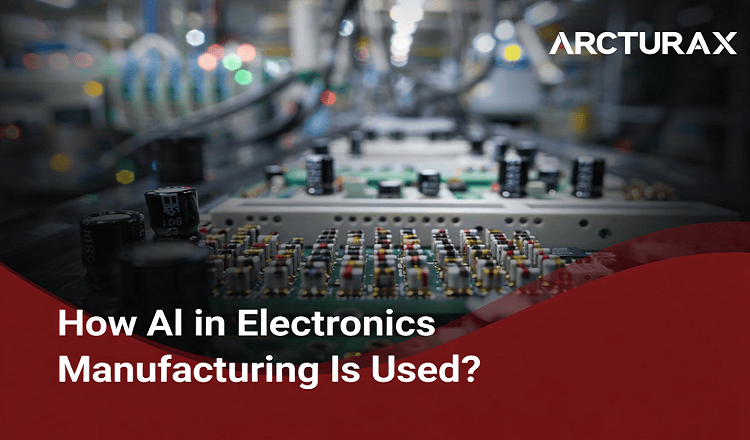
Electronics manufacturing involves multiple intricate steps, including precision assembly, quality verification, material handling, and post-processing. Each stage demands micron-level accuracy, as even slight deviations can lead to product defects or costly rework.
AI addresses these challenges by converting traditional setups into intelligent manufacturing ecosystems. It enhances real-time visibility across processes, enabling data-driven decision-making and ensuring that operations remain predictable, efficient, and stable.
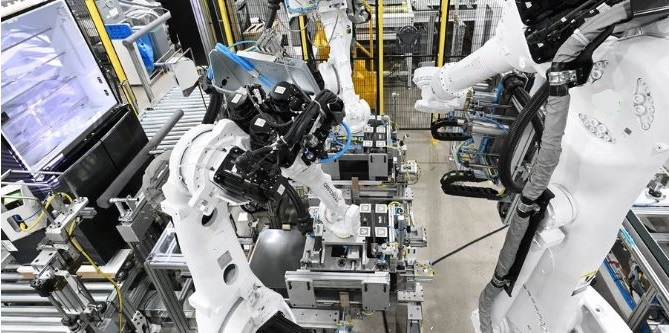
Predictive Maintenance and Asset Reliability
One of AI’s most impactful applications in electronics manufacturing is predictive maintenance. Traditional maintenance models rely on periodic checks or operator observations, which often miss early signs of equipment wear or malfunction.
AI-based systems continuously monitor parameters such as vibration, temperature, power usage, and cycle performance to detect irregularities long before failure occurs. This proactive approach reduces unplanned downtime, extends machine life, and ensures consistent production. By predicting maintenance needs earlier, manufacturers can protect assets while maintaining uninterrupted output.
AI-Driven Quality Control for Zero-Defect Manufacturing
Quality control is a defining factor in electronics manufacturing. Components are becoming smaller, denser, and more sophisticated, making human inspection or basic camera checks insufficient.
AI-powered machine vision systems now enable zero-defect manufacturing. These systems can identify solder inconsistencies, micro-cracks, alignment errors, and other anomalies with remarkable precision and speed. As they learn continuously, these models improve over time, leading to reduced rejection rates, stronger customer trust, and consistent product excellence.
Process Optimization for Operational Efficiency
Every second, a manufacturing line generates massive data streams. With the help of AI, manufacturers can analyze this data to identify bottlenecks, inefficiencies, or opportunities for improvement.
AI-driven process optimization fine-tunes variables such as temperature control, cycle duration, and machine coordination to deliver macro-level gains in productivity and cost-efficiency. The result: higher output, reduced waste, and lower production costs while maintaining quality standards.
Real-Time Decision Systems for Continuous Improvement
AI also drives real-time decision-making on production lines. Environmental variations such as changes in material properties, humidity, or equipment behavior can alter performance.
Using AI-enabled control systems, manufacturers can instantly adjust machine parameters to maintain uniform operation. This agility minimizes errors and waste, ensuring a stable environment even under changing conditions.
Energy Efficiency Through Intelligent Monitoring
Electronics manufacturing is energy-intensive, but AI helps manufacturers optimize energy use by identifying inefficiencies, idle periods, and peak-load cycles.
Through real-time energy monitoring and dynamic control, AI supports both cost efficiency and sustainability goals. By forecasting energy needs and optimizing equipment utilization, it ensures machines operate only when required, reducing both expenses and environmental impact.
The Role of Expert Partners in Implementing AI
Integrating AI effectively into a manufacturing environment requires experience, domain expertise, and robust engineering support.
Partnering with the right AI and automation expert, such as Arcturax Technology, ensures a smooth, customized implementation. Our team helps manufacturers assess existing processes, implement AI systems, integrate automation, and provide long-term technical support, enabling a seamless transition without operational disruption.
Future Outlook: AI as the Foundation of Smart Manufacturing
As we step into Industry 4.0 and beyond, AI will form the backbone of next-generation electronics production. Predictive analytics, autonomous robotics, deep-learning control systems, and interconnected networks are set to redefine what’s possible in manufacturing.
Early adopters of these technologies will gain a strong competitive edge in efficiency, quality, and scalability.
At Arcturax Technology, we are proud to be driving this transformation across the electronics manufacturing landscape. From microwave ceramic component rotary drying to PCBA cleaning and automation systems, our AI-powered solutions deliver unmatched precision, consistency, and efficiency. By combining intelligent engineering with deep industry expertise, we empower manufacturers to build smarter, more reliable, and future-ready production ecosystems.
Let’s transform your electronics manufacturing together. Get in touch with our experts to explore tailored AI solutions for your business.